
Message Editor - How To
There are many ways to get to the message editor. You could create an announcement, a feature story or just create a message. Each of these will open the message editor.
Message Content
Fill out each field of content. Use the formatting bar to format your text accordingly. Be sure you have reviewed how to format correctly.
The Details field uses the TipTap editor. Its standard tools include paragraph and heading styles, bold, italic, strikethrough, subscript, superscript, block quotes, horizontal rules, bulleted and numbered lists, in-text links, clear formatting, undo and redo. Heading 1 is reserved for the page title, so body headings begin at Heading 2.
When pasting from Word, email or another website, review the result rather than relying on the source formatting. CommCenter removes unsupported styles and keeps supported structure such as paragraphs, headings, lists and safe links.
The editor shows character counts for the Title and Summary fields. Counts turn into a warning as you approach the recommended limit and show as over-limit when the text is too long. Short, direct titles and summaries work better in website feeds, search results and previews.
Message Settings
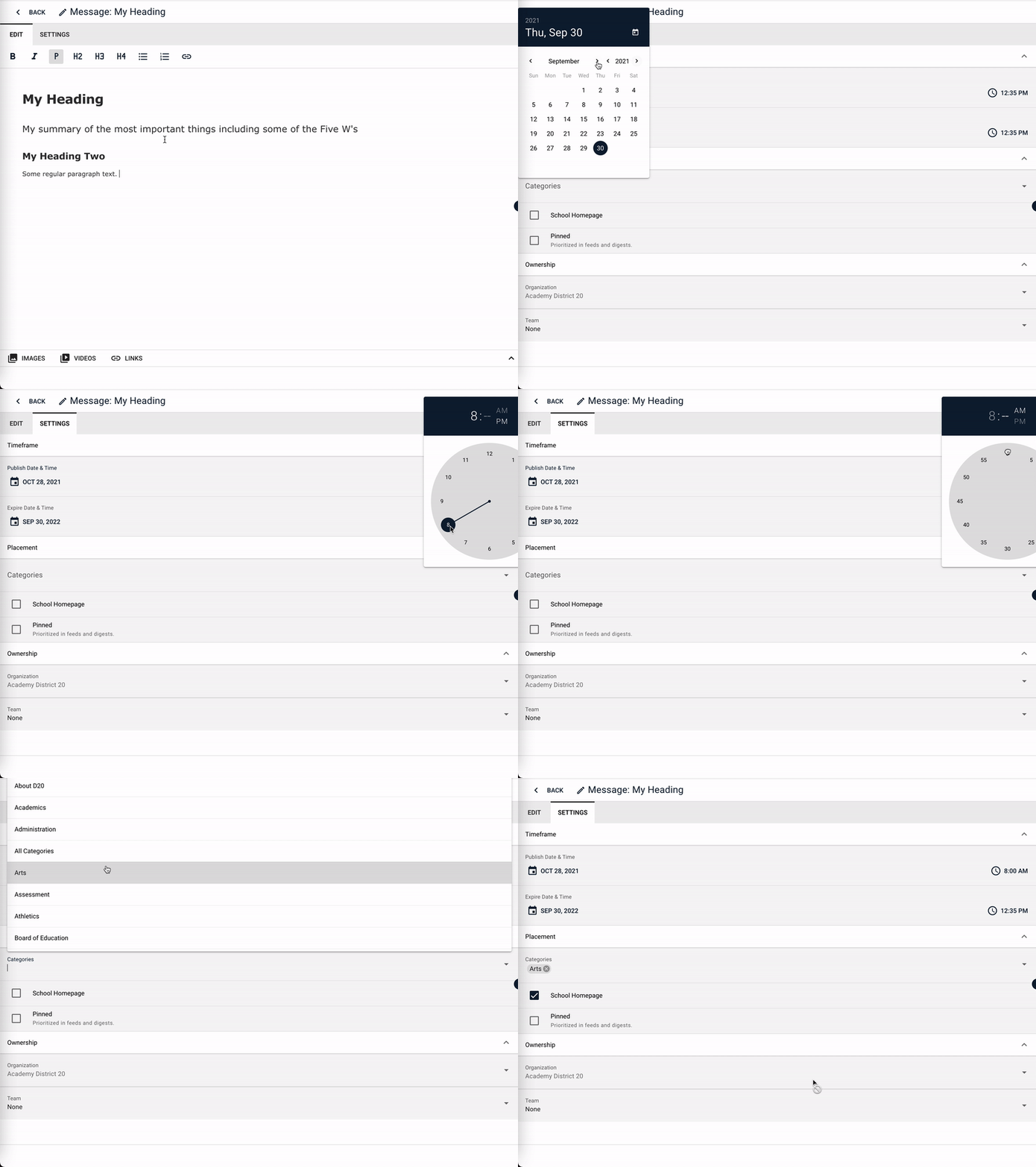
Message settings let you choose things like when the message is public, when it should expire or assign it categories.
Date Sensitive Publishing
If you want to have the message be visible after a certain date or expire after a certain date set the date fields accordingly.
Categories
Messages can have one category, multiple categories or no categories. It is a good idea to categorize a message in a way that makes sense to the topic you are writing about. You can only choose from existing categories. Categories can help us find related topics but also can determine which feeds your message displays in.
Website Address
The Settings tab shows the full message URL. Generate New URL rebuilds the URL from the current title and date. Use it only when the current address should change, because the old address will stop working after the message is published.
When an older announcement or feature is being reused as a new version, Reuse this Message updates its publish date, expiration date and URL together. Leave the message unchanged when you need to preserve its existing dates and address.
Using Polish with AI
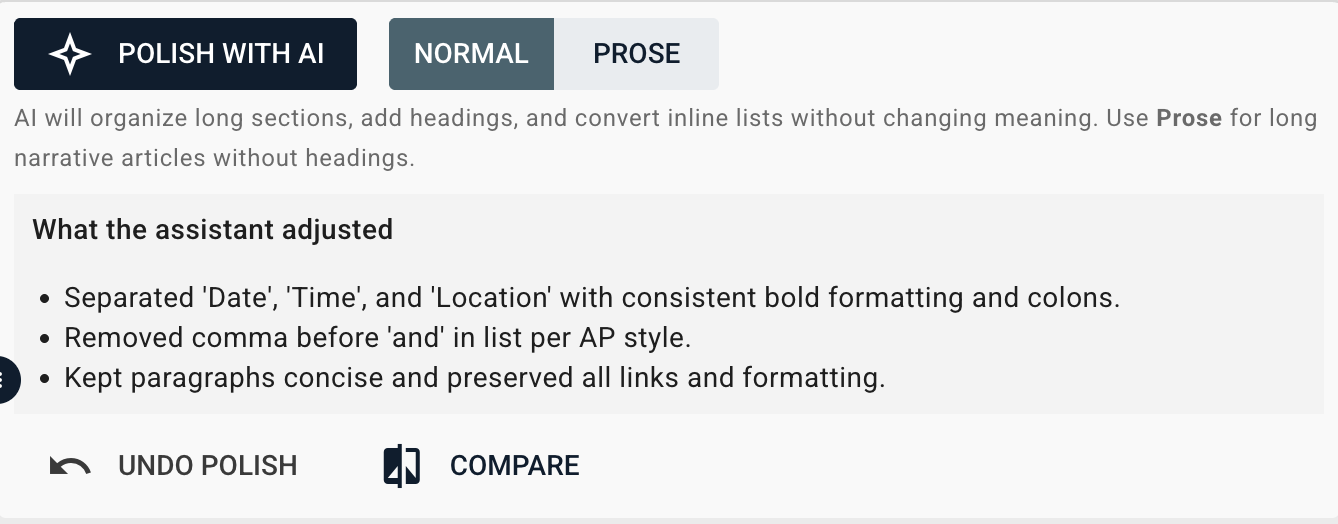
Using Polish with AI will send your body content to an AI agent. It will:
- Organize content into sections
- Add accessible headings when needed
- Correct grammar/spelling
- Make dates consistent
- Correct bullets/spacing/formatting when importing from other sources (like MS Word)
If you’re using it for long-form or narrative articles, like a journalism article, use the “Prose” switch and it’ll avoid adding headers and won’t change content.
Once you’ve used AI Polish, you’ll be shown what was changed, and be given options to compare the content changes or undo the changes.
Using AI Summary
The AI Summary button appears beside the Summary field. It uses the message body to draft a concise summary.
- Add enough detail to the body before generating a summary.
- Review the generated text for accuracy, tone and missing context.
- Use Undo AI summary if you want to return to your previous summary.
AI Summary is a drafting tool. The person publishing the message is still responsible for the final summary.
Previewing a Message
Use the Preview tab or panel to review how the message will appear before publishing. Preview is especially useful after using AI tools, adding images, changing the cover image, or pasting formatted content from another source.
The Quality tab lists publishing errors and content quality feedback. Resolve required errors before publishing.
If the History tab is available, it can preview earlier saved revisions. Administrators can restore a revision's title, summary and body, review the result in the editor, and then save or publish it as a new revision. Restore does not change publishing settings, related links, attached media or the message URL.
Saving and Publishing
You can save your message as a draft or publish it.
Saving as a draft allows you to come back and work on your message later. A draft message is not visible on your website.
Publish means your message is public and is visible on the website. A published message must be an announcement or a featured story for it to show up in a feed on your website.
A message with a publish date in the future will remain unseen until the publish date is reached. Similarly, once the expire date passes, the message will no longer be visible.
Re-saving a published message as a draft means it is no longer public and will not be shown on your website.